A solid is given to you
A solid is given to you. Not chosen — given. Black, mute, six identical faces, undifferentiated all the way through. This is the honest condition of substrate: matter before anyone has bothered to mean anything by it. The cube begins as the thing the world hands you and asks nothing about.
Then a corner is removed.
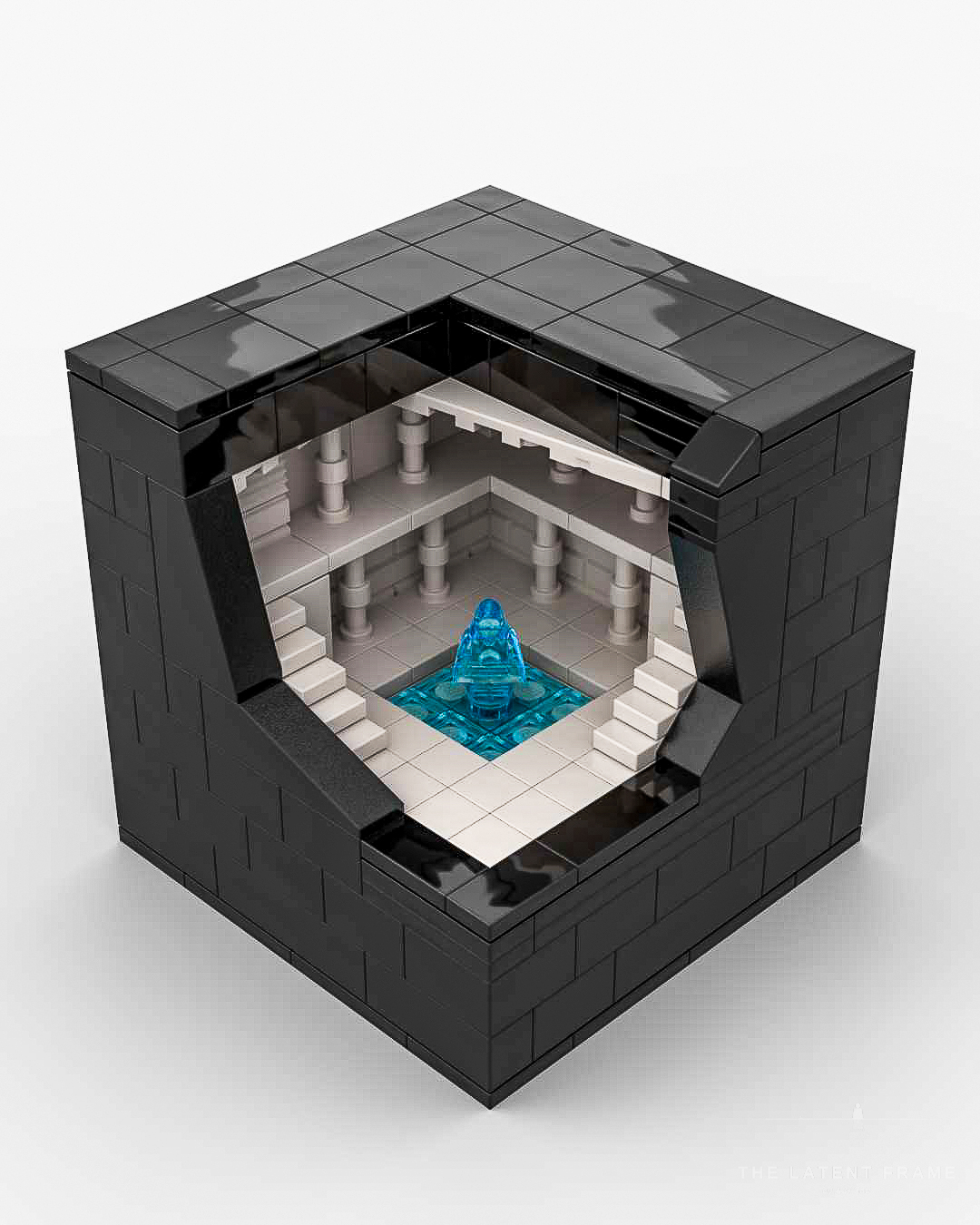
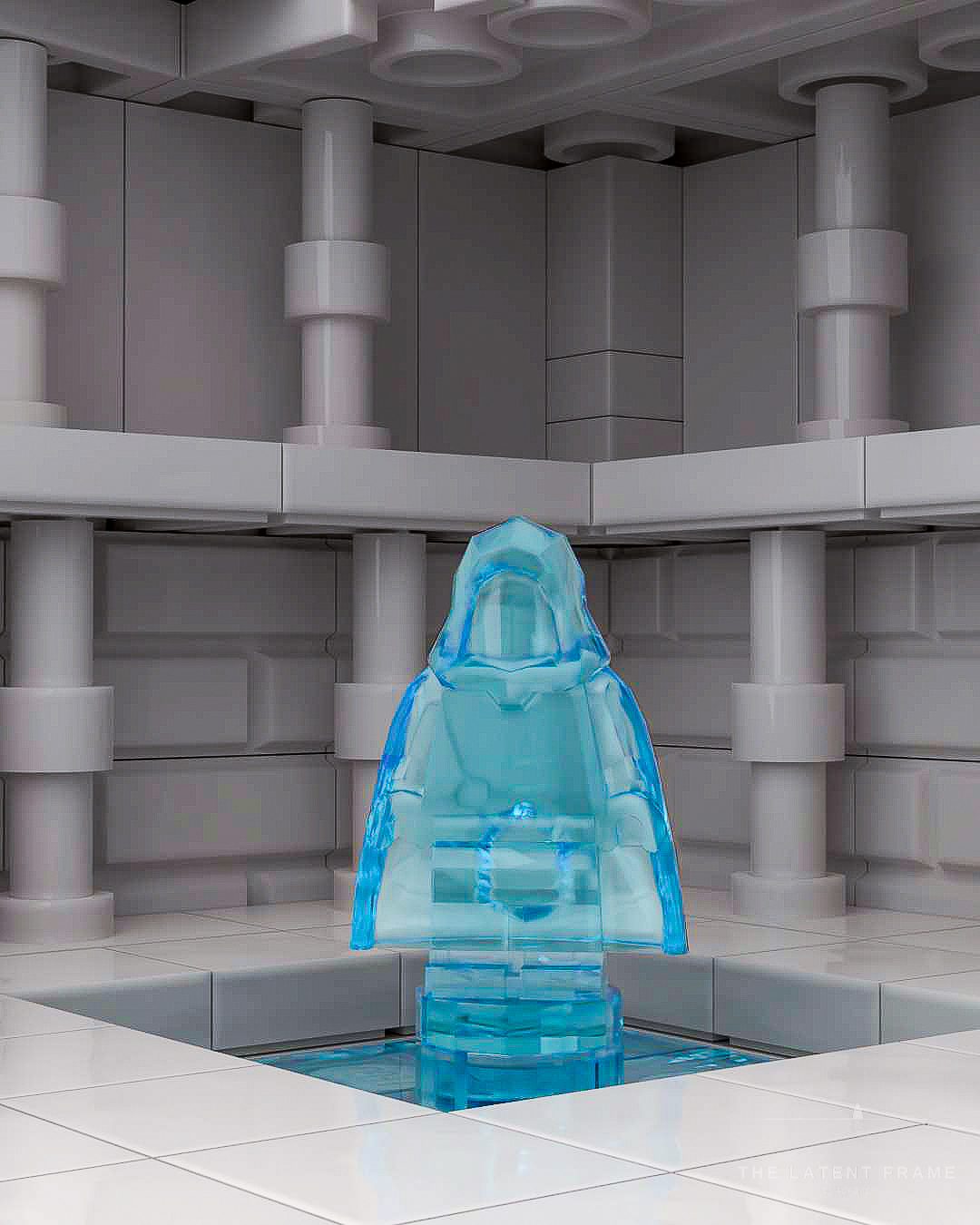
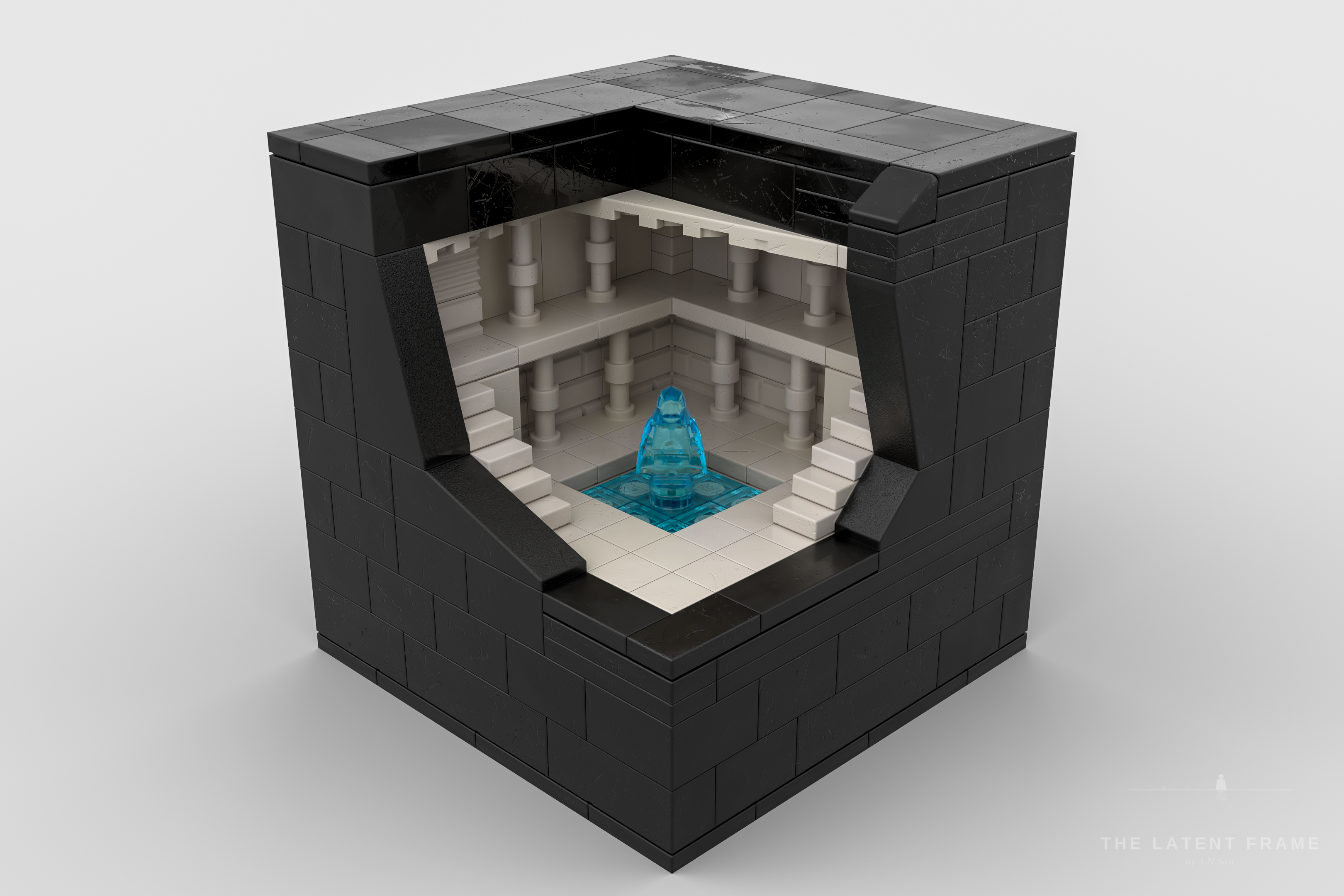
Nothing is added to make the interior. The temple is not placed into the cube — it is the cube, minus what was carved away. White columns ring a sunken floor. Terraced stairs descend in clean increments. At the centre, lit by the pale chamber around it, sits a hooded figure of trans-blue light: the genius loci, the spirit of the place.
Architectural psychology has carried that phrase for two thousand years — the conviction that a built space holds a presence, a character, a soul that visitors feel and cannot quite locate. The old reading is mystical: the spirit was already there, and the architect's job was to listen for it. This work argues the opposite. The substrate was raw. There was no spirit to find. The presence at the centre is not what the place contained — it is what thinking about the place produced. Identity is not excavated from matter. It is built into it, decision by decision, at a cost.
That cost is the real subject of the series. Order is not the natural state of anything; left alone, matter trends toward the mute and the undifferentiated — toward the blank cube. To carve a temple into it, to make one configuration of black-and-white mean something where every other configuration means nothing, is to spend effort against that trend. It is a negentropic act. A mind imposing a self on a space that did not ask for one — and the figure of light is what that imposition leaves behind.
Which is also, if you sit with it, what a home is. And what a person is. You are handed substrate, and you decide what to remove.
Build notes
The Genius Loci Cube is a trophy-scale object, built to be turned in the hand and read from every side. The exterior is a genuinely perfect cube — clean and studless on all six faces. That sounds like a styling choice and is in fact the hardest discipline in the medium: closing a cube honestly, with no exposed studs and no cheated seams, forces every joint inward and demands that the structure resolve itself out of sight.
The interior is carried by two half-stud techniques. The columns are bars — 2L with stop ring — seated into jumper plates, so each round shaft lands on an offset the standard stud grid forbids, ringing the chamber where a brick-built column never could. The staircases work on the same logic: half-jumpers let the steps climb in increments the orthogonal grid won't permit, so the descent into the chamber reads as carved rather than stacked. The whole interior is the argument made physical — order wrung out of the grid by refusing to accept the grid's defaults.
Watch
Specifications
- Series
- Arkitektura Entropika · Work 02
- Parts
- 298 · 56 unique elements
- Scale
- Trophy / display
- Dimensions
- 80 × 80 × 83 mm · 222 g
- Geometry
- Perfect cube — studless on all six faces
- Palette
- Black substrate · white chamber · Trans-Light-Blue figure
- Techniques
- Bar-on-jumper columns · half-jumper staircases
- Designed in
- BrickLink Studio