
The same house, told five different ways.
Beige walls. Red roof. Green tree. Blue door. We took one perfectly ordinary house and built it at every single scale we work in — from something the size of a fingertip to something that won't fit through a doorway. Here's the field guide. Enjoy.

Scale is the first decision a builder makes.
Before any brick goes down, a builder chooses what conversation to have. Five sizes, five completely different things a brick can say. The same subject becomes a silhouette, a planner's diagram, a sculpture, a small-figure diorama, and a dollhouse you can sit beside.
The bricks change. The rules of attention change. The house, somehow, stays the same.
These five scale names are our own shorthand, not official LEGO Group designations. Piece counts and footprints below describe the example house shown here; individual builds can be much larger or smaller within the same scale.
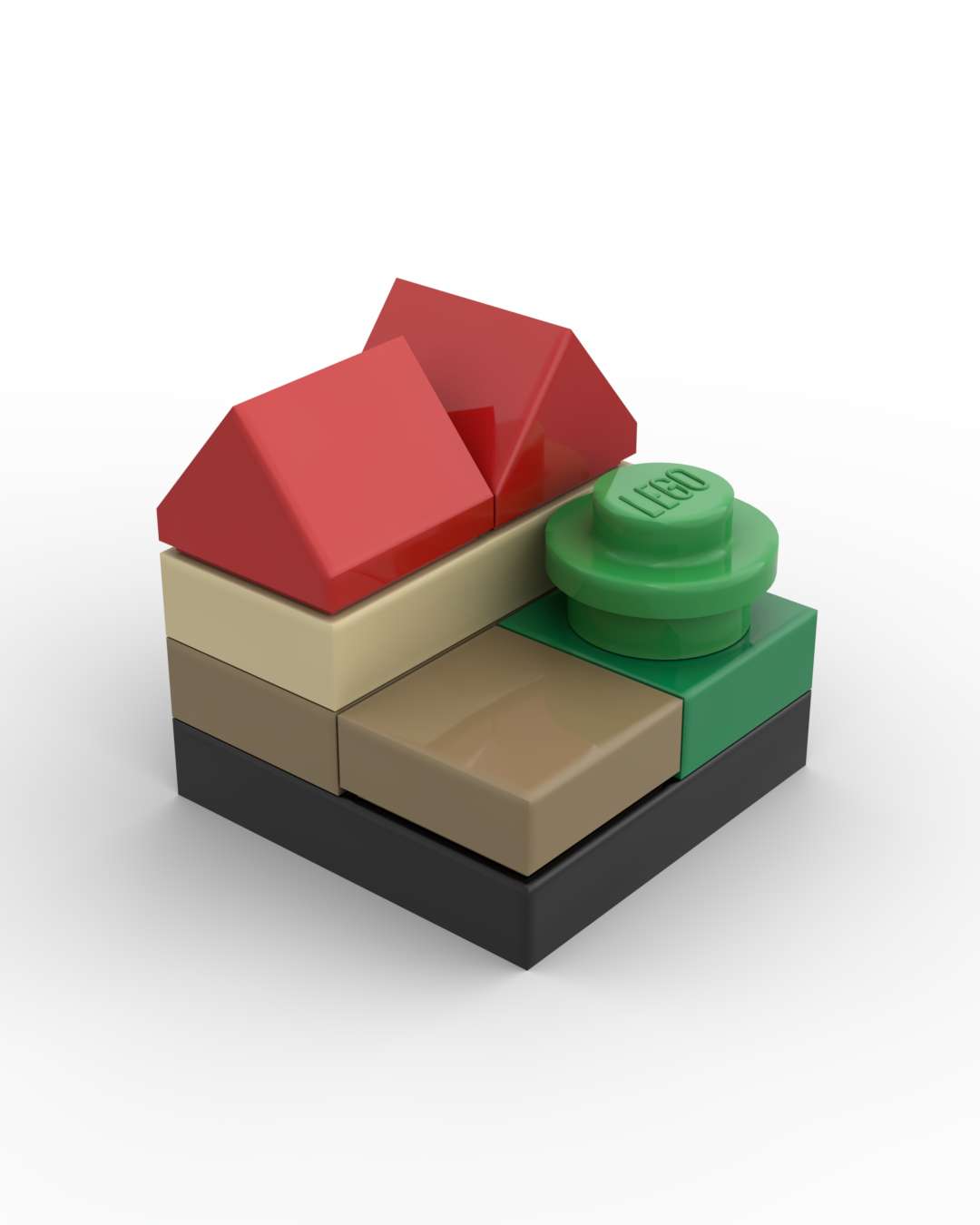
The smallest unit of a world.
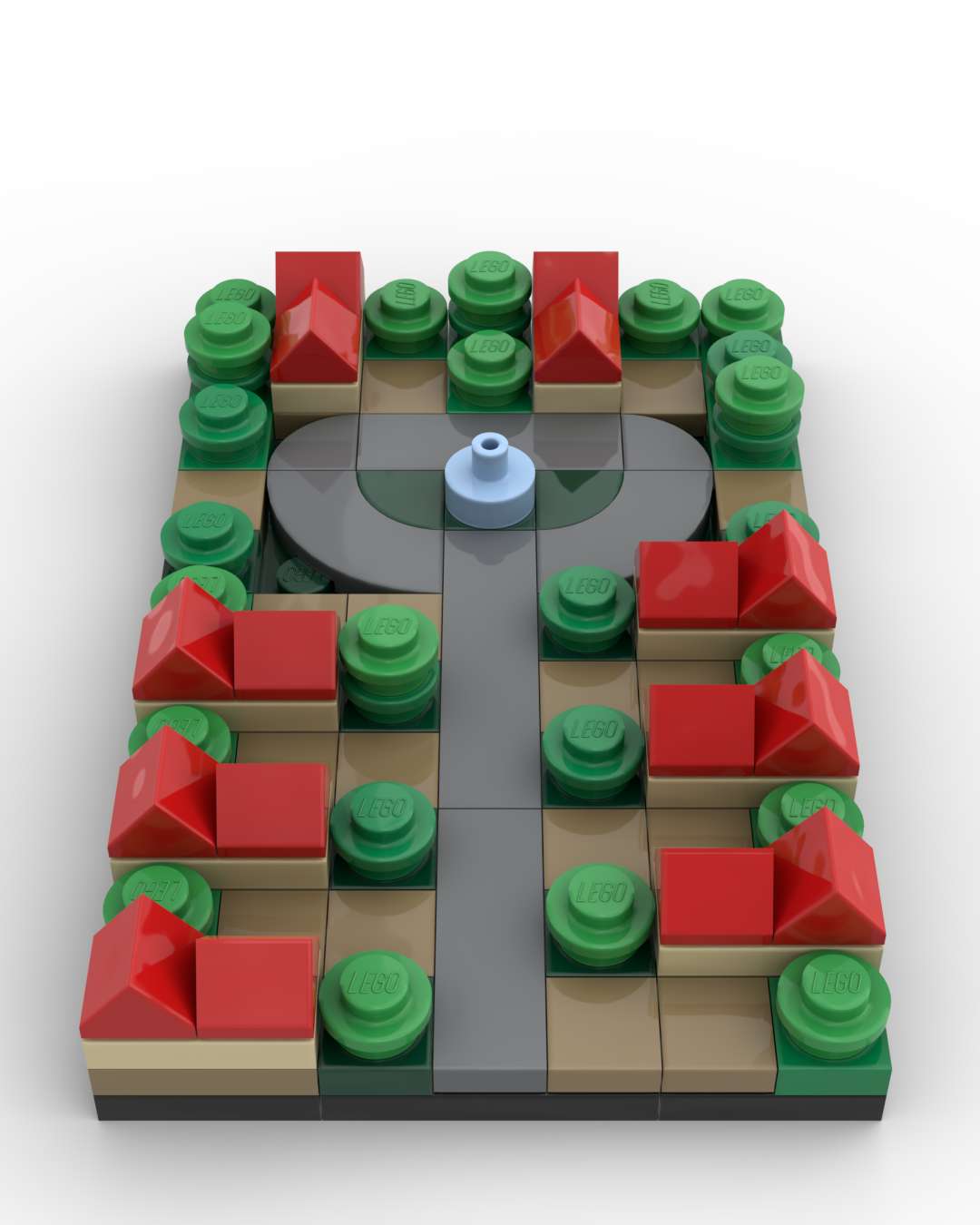
≈ 1 : 1000+Nano is the long view, in miniature. A whole house in roughly six bricks. A whole street in eighty. At this scale a roof tile is the entire roof; a single green plate is "tree." You stop drawing the house and start drawing the idea of one — composition and silhouette do everything detail can't.
Nano scales both ways: smaller still, and larger. A city block, a town, a coastline. It's where anything massive gets dragged back into a size a person can actually look at.
At the table, a nano-scale model of the whole castle sits beside the battlemap. Players crawl one room at minifig scale; the nano build, in one hand, keeps the whole keep in view. Nano carries the world; the larger scales carry the moment.
- Example pieces
- 6 – 10
- Example footprint
- ~30 mm
- Reads as
- silhouette
- Best for
- whole regions, table-side context
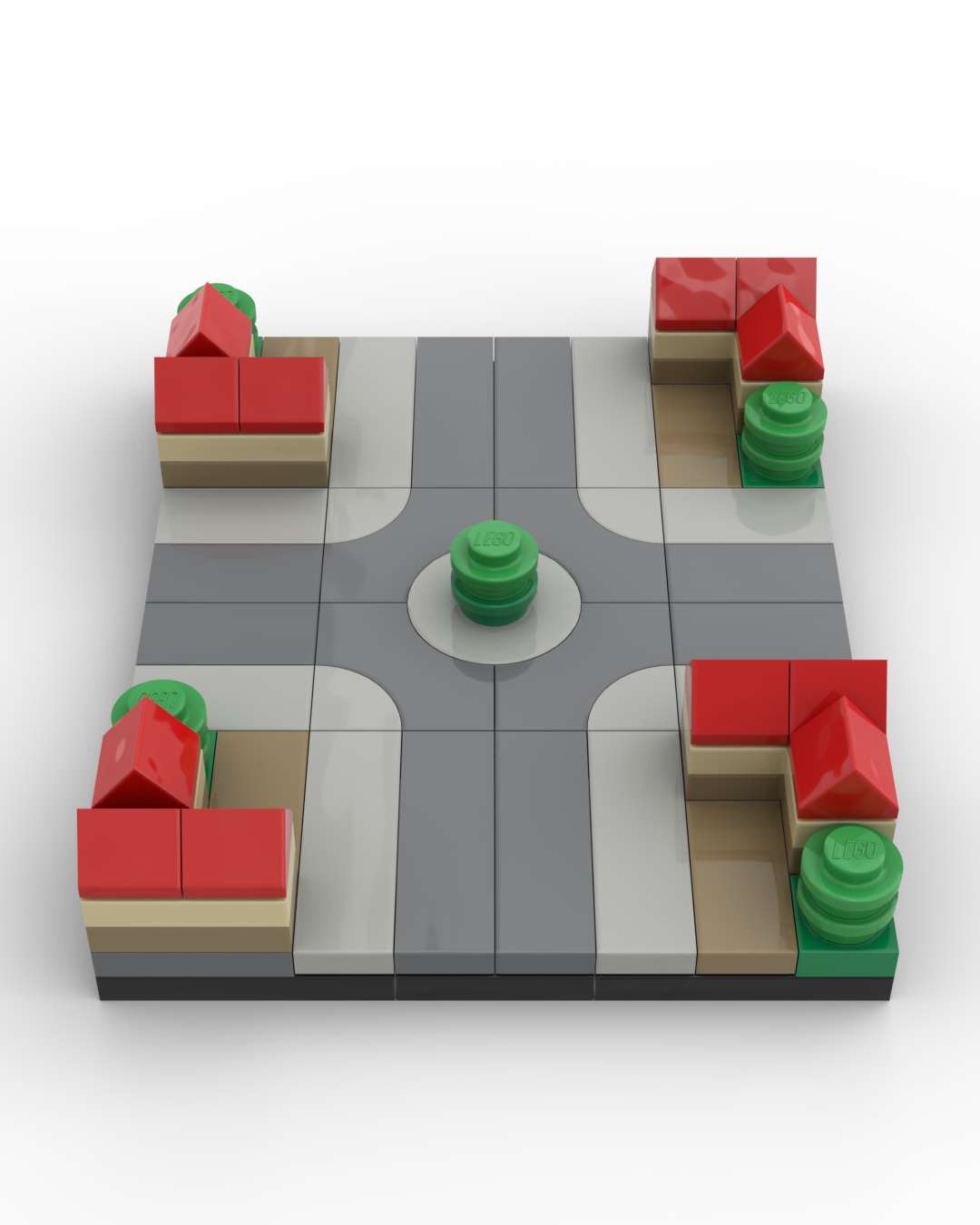
Nano scales up as readily as down — a larger neighbourhood, still small enough to sit in one hand. The rotating clip on the left plays on tap.
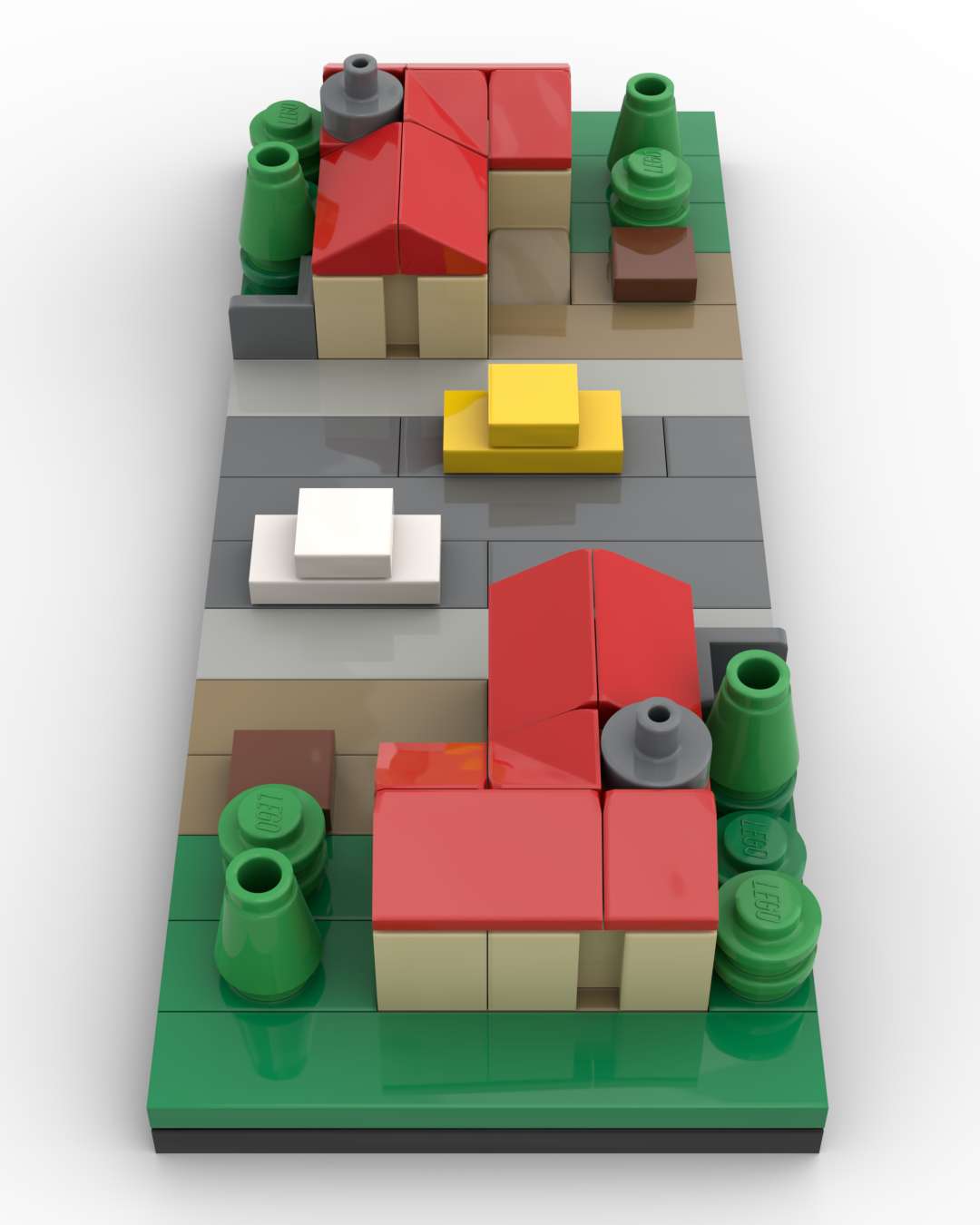
A building per finger.
≈ 1 : 200Micro is the scale of architecture. A roof recognisable as a roof. Windows that imply rooms. A road wide enough to mean "street," not "stripe." This is where the brick starts behaving like an urban planner — corners, blocks, a whole town centre read the way a model in a planning office reads.
Not to be confused with microfigure scale below. Micro is a measure of how big the build is. Microfigure is a measure of how big the figure standing in it is.
Paired with nano at the table to give players the architecture they cannot see from inside a room. A micro-build of the castle's whole upper ward sits between the players and the minifig battlemap — close enough to point at, big enough to read at a glance.
- Example pieces
- 30 – 80
- Example footprint
- ~80 mm
- Reads as
- architecture
- Best for
- neighbourhoods, context plates
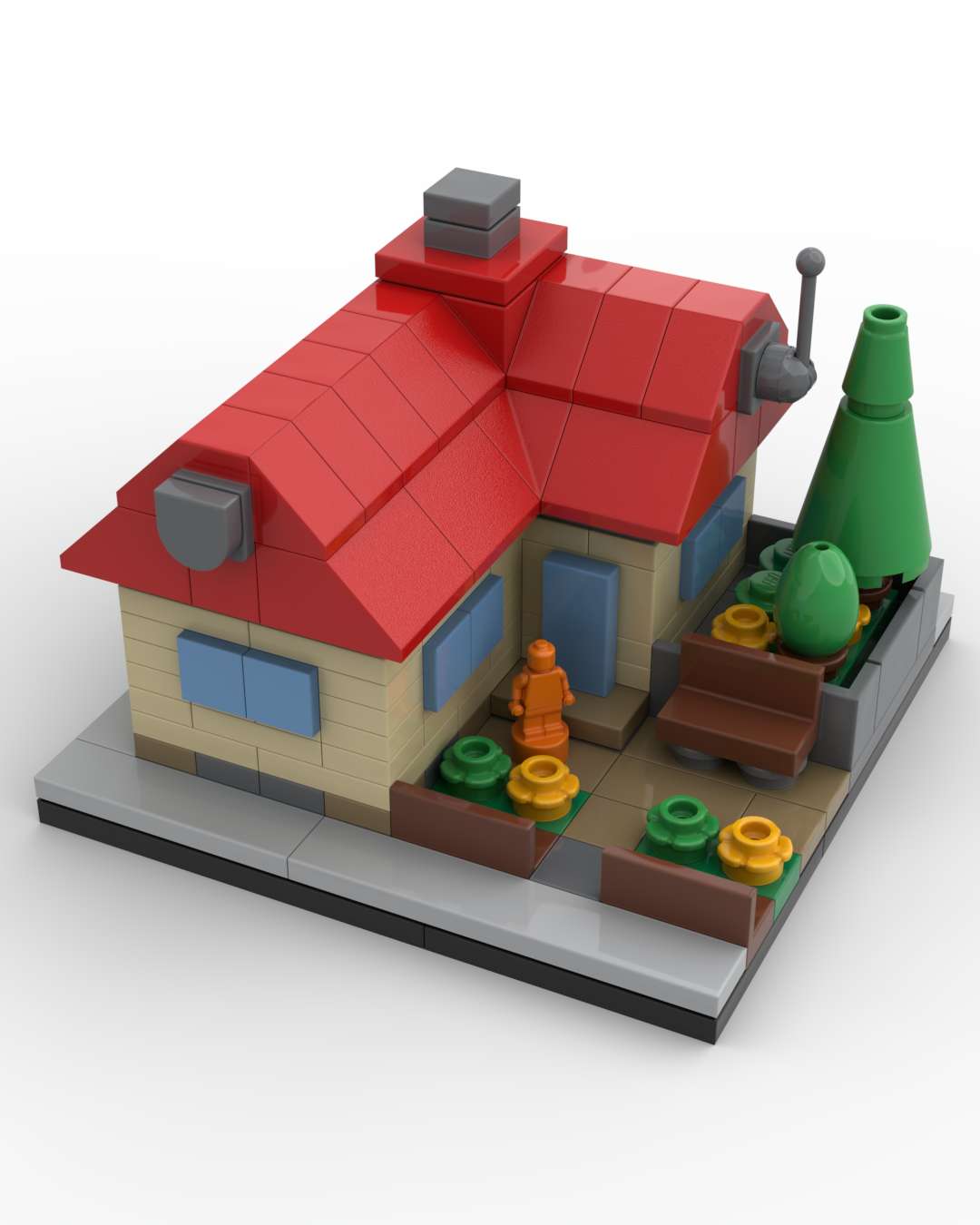
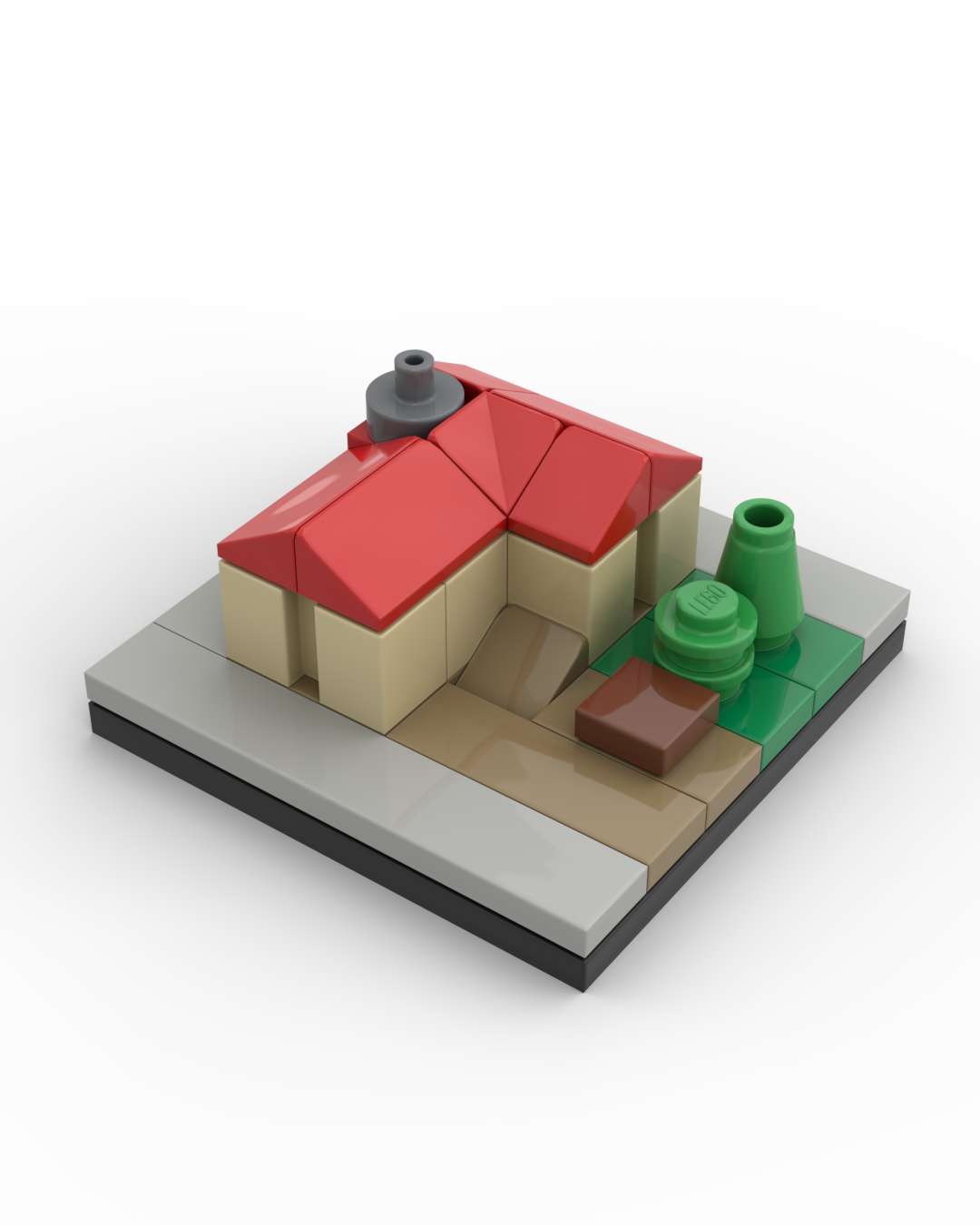
Lights on, no inhabitants.
≈ 1 : 100Trophy scale takes its measure from the LEGO® trophy figure — the small one-piece statuette, present as an ornament rather than an inhabitant. The build is single-subject, fully detailed, designed to be looked at rather than played with. The chimney has weight, the antenna a thin grey leg, the garden is real shrubbery.
This is the scale of architectural portraits — the bread and butter of commissioned work. Big enough to honour the subject; small enough to sit on a shelf.
Trophy is the planned travel-dungeon scale: a compact dungeon designed to pack into a bag, travel safely and set up wherever the game is running. Portable, durable, no piece worth losing.
- Example pieces
- 300 – 800
- Example footprint
- ~150 mm
- Reads as
- sculpture
- Best for
- commissions, travel dungeons
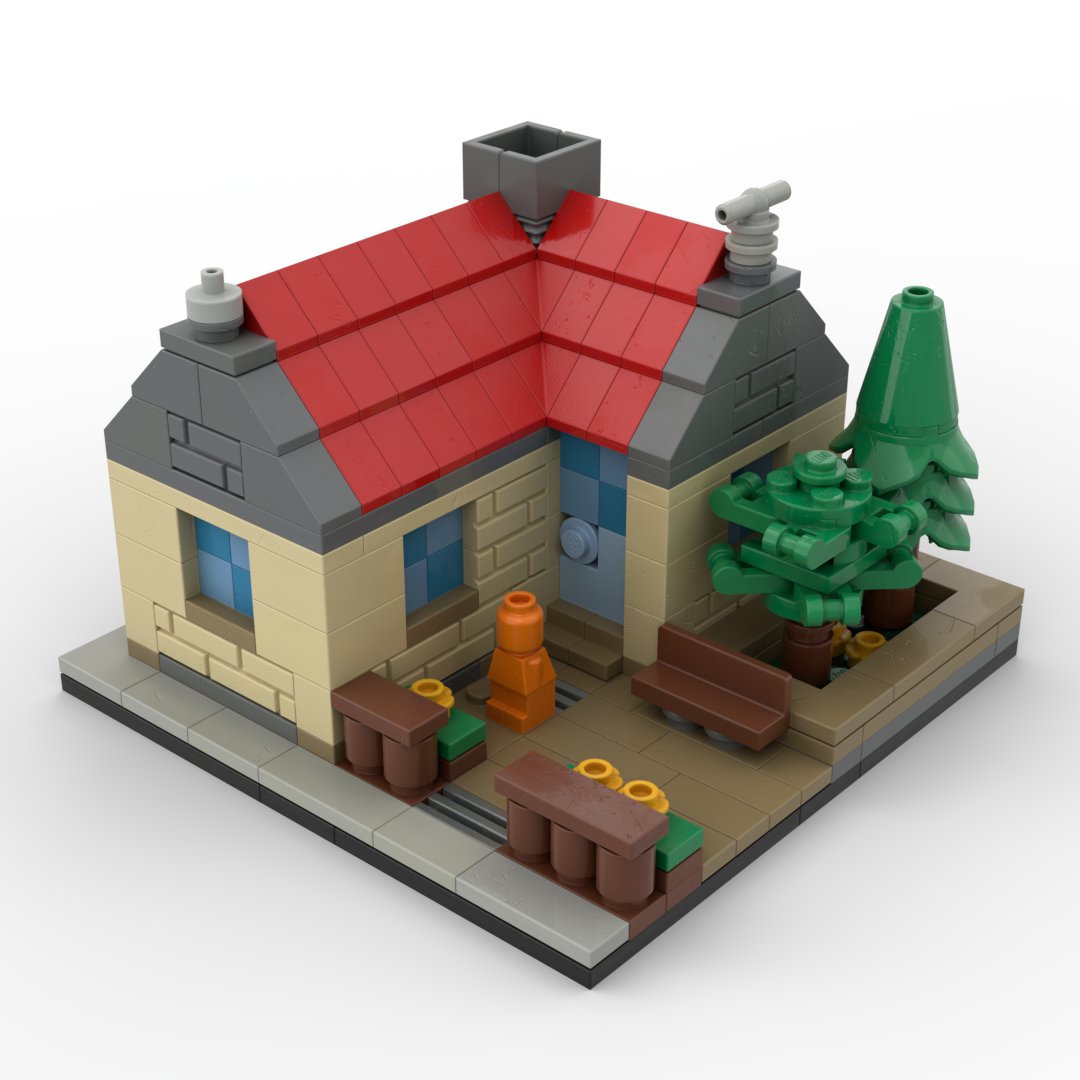
Small Heroes, Big Worlds.
≈ 1 : 70Microfigure scale takes its measure from the small one-piece LEGO® figures used in sets like Heroica and Fortaan. A microfigure is roughly half the height of a minifigure — and a build sized to suit it lands a notably more compact footprint than a minifig diorama. Less interior detail; more portability; a real play scale, just a quieter one.
At this scale a corridor is one stud wide. A door is a tile. A whole tower fits between your wrist and your elbow. The figures are quick to set down, quick to pack away, and forgiving on a venue table where a knocked-over minifig would be a small tragedy.
Microfigure is the planned outcall scale. Future games at venues, libraries, conventions and schools are being designed around a portable microfigure playset with a nanoscale overview model alongside it.
- Example pieces
- 600 – 1,500
- Example footprint
- ~220 mm
- Reads as
- playable diorama
- Best for
- outcall games, pop-ups
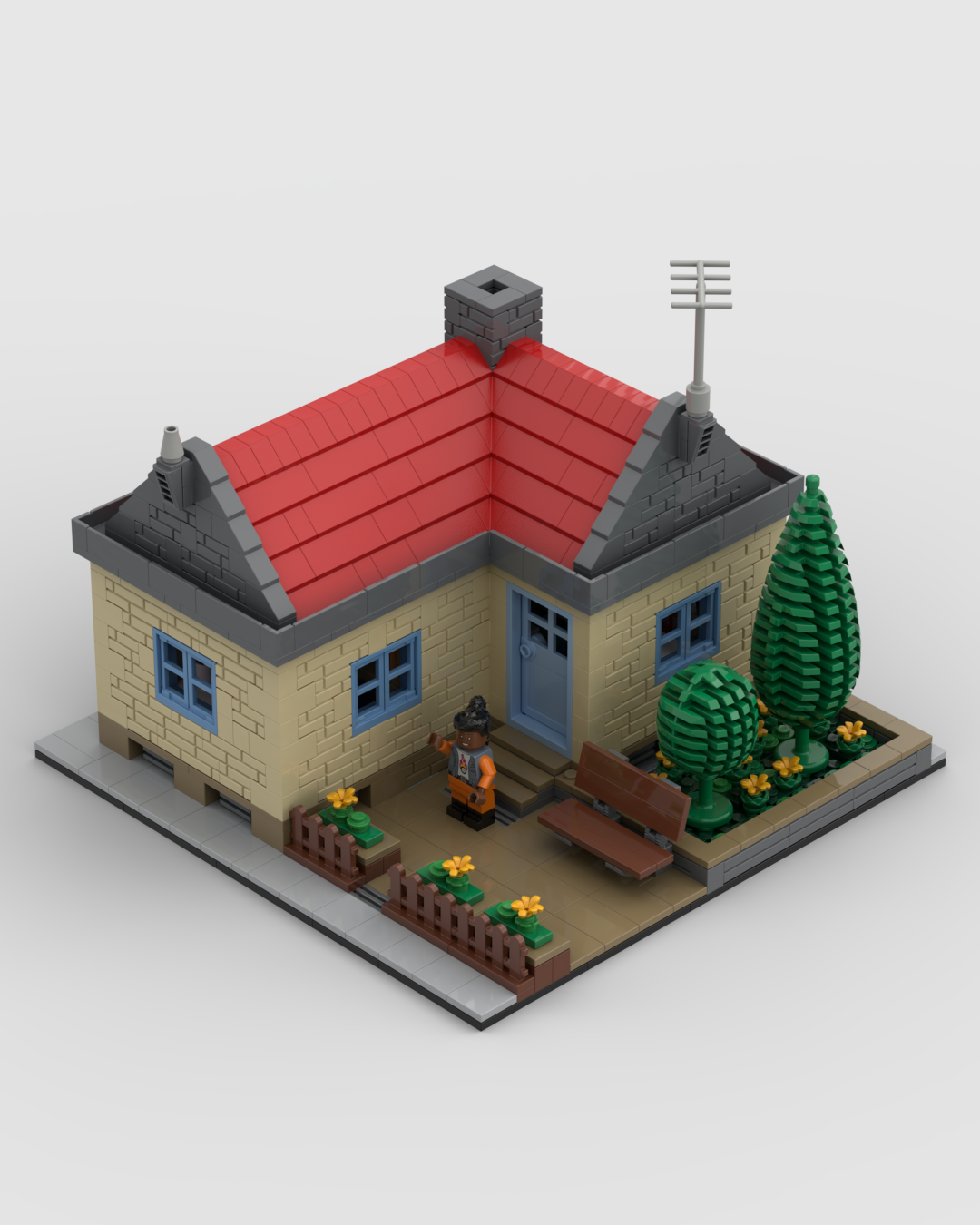
The first scale you walk into.
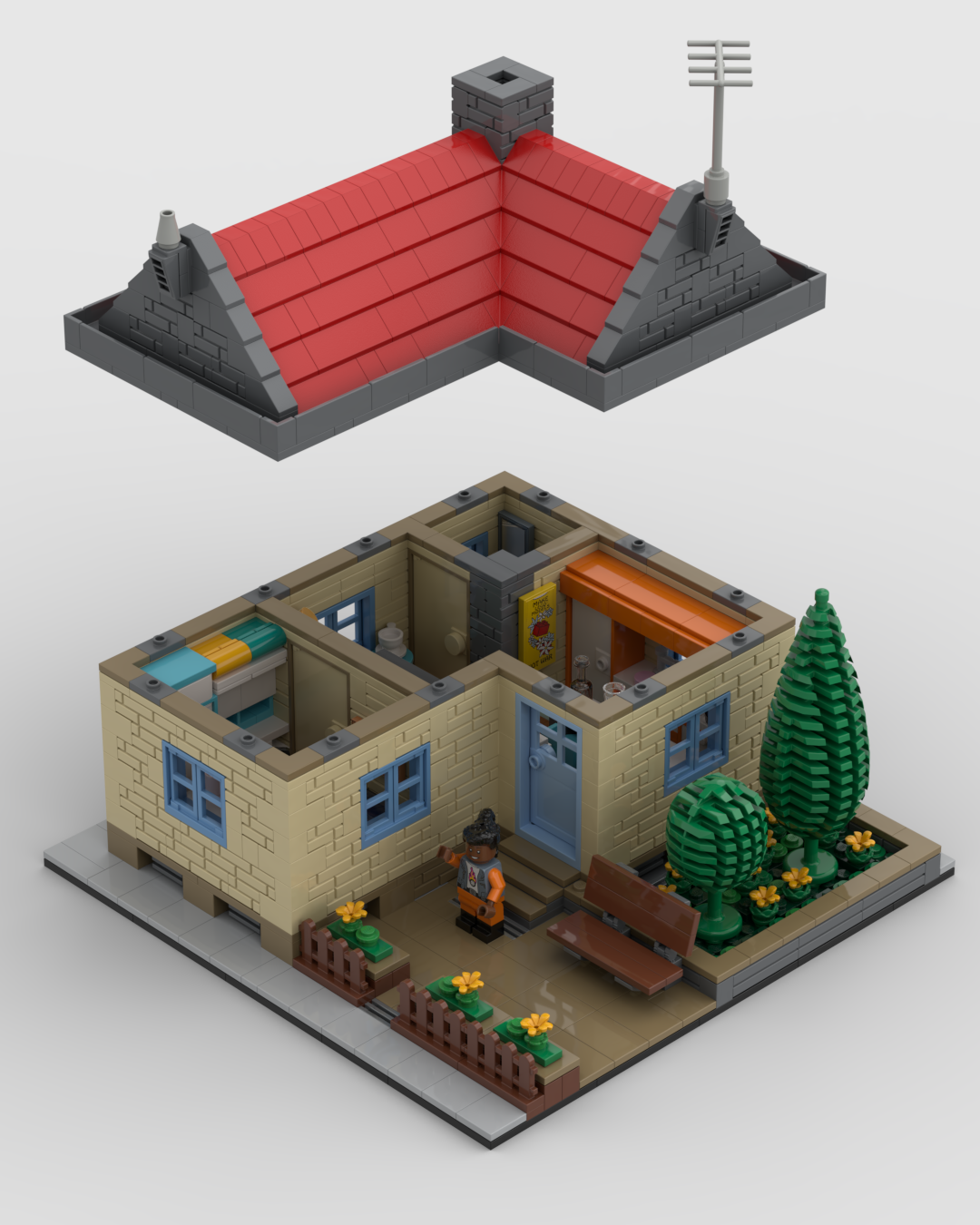
≈ 1 : 42Regular LEGO® scale — the one the brick was designed around. At minifig scale the house is no longer a model of something. It is a place. The porch has its own structure. The garden has a working fence. The roof lifts off and inside is an actual interior — rooms with right-angles you could sit down in, if you were the right size.
This is where the brick crosses over from sculpture to architecture. A minifigure can credibly say "I live here." A tabletop session can credibly be set inside. You stop looking at the build and start looking through it.
The planned home scale. In-studio Everplenty dungeons are being developed at minifig scale, with each battlemap rendered floor-by-floor and a nano keep beside it for context. This is the long, slow, satisfying scale.
- Example pieces
- 1,500 – 3,000
- Example footprint
- ~320 mm
- Reads as
- a place
- Best for
- studio play, tabletop campaigns
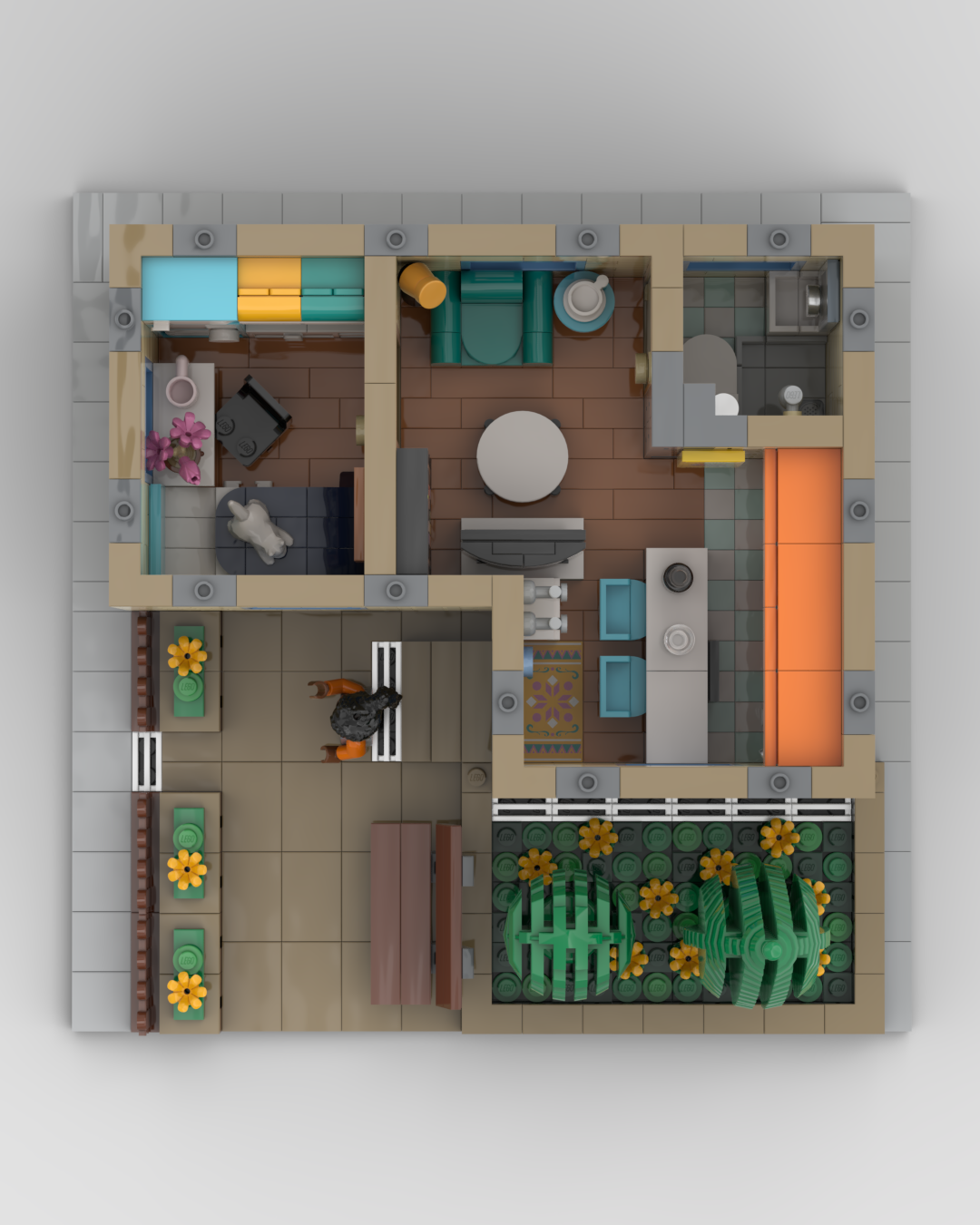
A genuine domestic floor plan: kitchen, living room, bathroom, bedroom, side garden, back deck. Every wall and fitting is a LEGO® part — the same plan a small architect's office would draw for the real house. The walkaround clip on the left plays on tap.
Three scales, one game.
Every Everplenty session mixes more than one scale on purpose — and the combinations are where the magic happens.
Minifig + Micro + Nano
The home table. Players act on a minifig-scale battlemap — one floor of the dungeon, in full domestic detail. A micro-build of the same dungeon sits beside it for tactical context. A nano model holds the wider world. Three scales, one game, all in view.
Microfigure + Nano
Games on the road — venues, libraries, conventions, school programs. The party plays on a microfigure-scale playset, with a nanoscale overview model beside it holding the whole dungeon in view. The whole game fits in a case, sets up in five minutes, and survives a knocked-over coffee.
Trophy
A whole dungeon built at trophy scale and made to travel — the full play set packs down into a bag alongside your other essentials and sets back up wherever you land. More presence than a microscale map; tougher than a studio build.
Which scale, when.
A cheat-sheet you can read in one sitting. Keep an eye on the "wrong when" column — it's the most useful one.
Got a subject? We'll pick the scale.
Most commission briefs come with a feeling but no idea of size — and that's perfectly fine. Tell us the story — the house, the building, the creature, the moment — and we'll come back with a scale recommendation, a sketch direction, and an honest sense of whether it's a piece we'd build brilliantly for you.